
2/2/2026

3
minutes
Close protection officer (APR) vs security guard
Learn about the key differences in responsibilities and training between a close protection officer (RPO) and a security guard.

Learn about the key differences in responsibilities and training between a close protection officer (RPO) and a security guard.
The domain of private security offers numerous professional opportunities, including two key roles: close protection officer (APR) and security guard. Understanding the differences between these professions is essential to guide your career and meet the specific requirements of each position. In this article, we'll go over the definitions, missions, and key differences of each function to help you choose the path that's best for you.
One close protection officer (APR) is specialized in personal safety specific customers, often public figures, business leaders or diplomats. Its role consists in:
APRs are trained to deal with dangerous situations and ensure the protection of their customers in varied environments, sometimes at high risk.
One security guard focuses mainly on protection of assets, installations and sometimes people, within a defined perimeter. Its missions include:
Security guards are present in various public places, private companies or large-scale events, where safety must be strictly controlled.
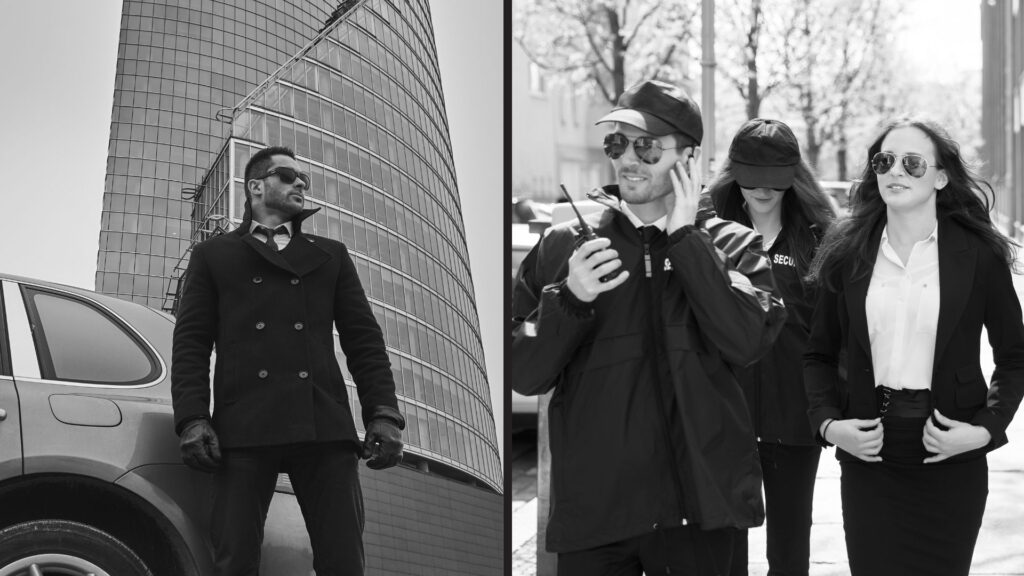
Despite their similarities, theAPR And thesecurity guard stand out on several points:
In summary, the APR is trained in direct threats and to high-risk missions, while the security guard is more concerned with preventive security around a site or an event.
The decision to become close protection officer or security guard depends on several factors:
To note : The APR generally intervenes for high-end customers or sensitive, while the security officer may be assigned to industrial, commercial or event sites, where the protection of goods and people is a priority but less individualized.
That you planned to become APR or security guard, know that theinvolvement Toward the Safety And the tranquillity is essential in this sector. Both jobs play a crucial role in:
The professions ofclose protection officer (APR) And ofsecurity guard share a common goal: ensure safety. However, their missions, training and areas of intervention differ significantly. Before choosing one of these paths, it is crucial to weigh the level of specialization, the type of environment And the Level of responsibility that you are looking for.
Do you need additional advice or professional support?
Chez Lima Protection, we are experts in private security and offer a wide range of services, from close protection to event security. Do not hesitate to contact us to find out more about our solutions or to discuss your projects in the security sector.
1. What training is required to become an APR?
To become an APR, you must follow a specialized training in close protection, including conflict management, defense techniques and in-depth knowledge of threats. Certifications vary by country and training organization.
2. Can a security guard evolve into an APR position?
Yes. With experience, additional training and the development of specific skills, a security guard can evolve into a role ofAPR. This often requires additional modules in close protection and an adapted physical condition.
3. What is the average salary for an APR compared to a security guard?
Les APR are generally better paid due to the demanding nature of their missions and of their more advanced training. Les security guards, on the other hand, have more variable salaries depending on the sector of activity and the level of responsibility.
4. What types of missions does the APR intervene in?
An APR intervenes with exposed persons (VIPs, politicians, diplomats) in situations at high risk or during sensitive trips. Its objective is to guarantee the safety of the person, whether in daily life or during specific events.
5. What personal qualities are required to perform these jobs?
La discretion, the composure, the vigilance And the trustworthiness are essential to become an APR or security guard. La stress resistance And a strong sense of observation are also highly sought after in these professions.
By clearly understanding the differences betweenclose protection officer And thesecurity guard, you will be able to make an informed choice for your career. Each of these jobs offers its own set of dares And of rewards, but both ask for a strong commitment to ensure the protection of people and property.
